Research Demo · Connecting space, causality, and discovery in living systems

We connect observations, experiments, and open data to explore living systems across scales, from local processes to a changing world.

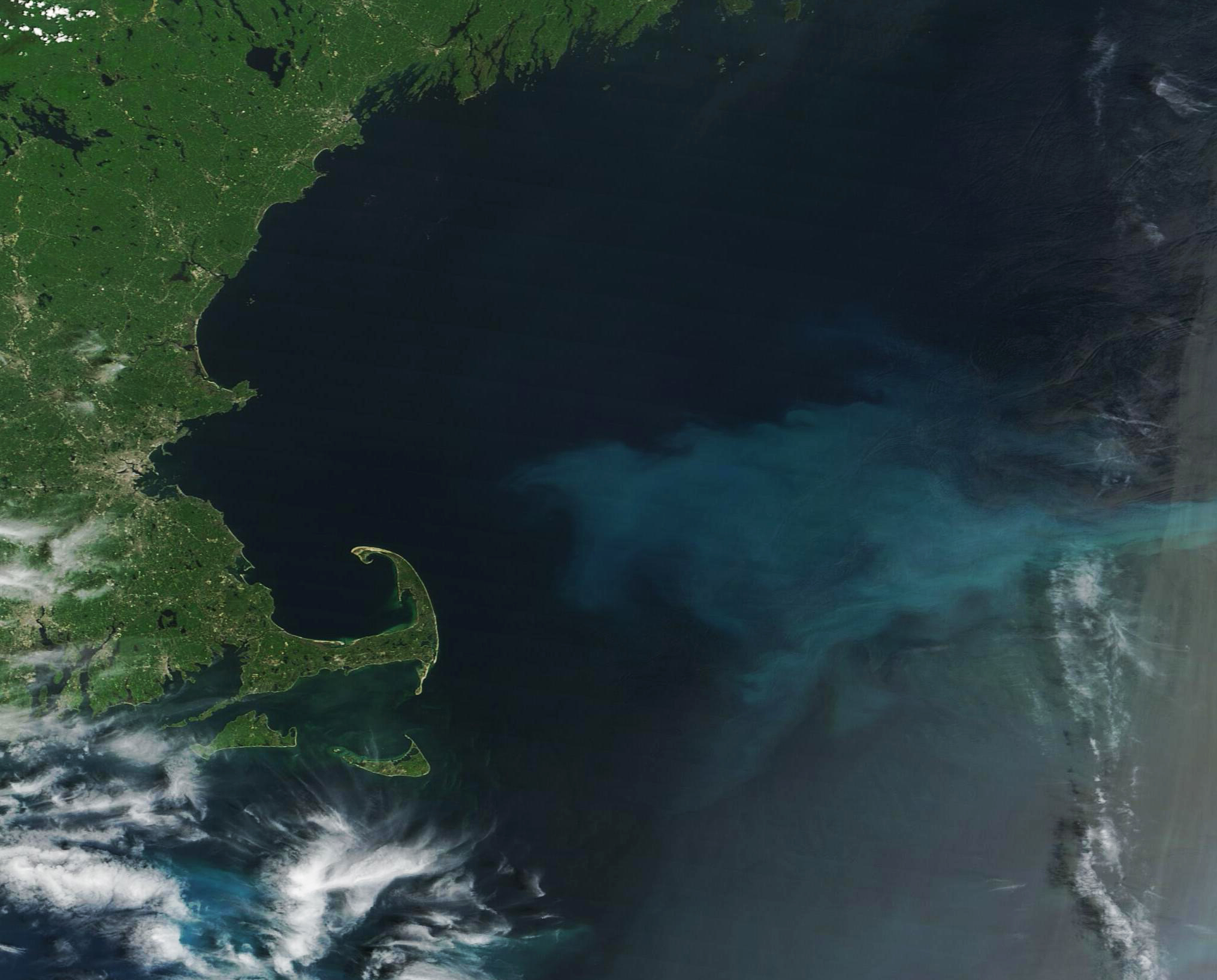
NASA / MODIS

Scientific questions

Four research directions connect climate responses, ecohydrology, carbon cycling and ecological methods. Publications can contribute to several directions.

View research
Learn more →

How do ecosystems respond and adapt to climate change?

  1. Ecosystem responses
  2. Climate effects
  3. Climate variability
  4. Patterns across scales
  5. Demo synthesis and open questions
Read details +Hide details −
Why it matters

This direction connects the group’s interest in climate adaptation and extremes with evidence about photosynthesis and greenhouse-gas responses.

Topics
  1. Ecosystem responses
  2. Climate effects
  3. Climate variability
  4. Patterns across scales
  5. Demo synthesis and open questions
Learn more →

How does water availability shape ecosystem photosynthesis?

  1. Plant water relations
  2. Groundwater and vegetation
  3. Catchment processes
  4. River and groundwater links
  5. Demo synthesis and open questions
Read details +Hide details −
Why it matters

Distinguishing water constraints at plant, soil and landscape scales helps organise evidence about when and where water availability matters.

Topics
  1. Plant water relations
  2. Groundwater and vegetation
  3. Catchment processes
  4. River and groundwater links
  5. Demo synthesis and open questions
Learn more →

How do carbon processes inform nature-based climate solutions?

  1. Vegetation function
  2. Wetland greenhouse gases
  3. Nature-based climate solutions
  4. Soil greenhouse gases
  5. Methane production
  6. Carbon and energy exchange
  7. Environmental constraints
  8. Demo synthesis and open questions
Read details +Hide details −
Why it matters

Carbon uptake and greenhouse-gas release must be considered together when interpreting ecosystem climate effects. Laboratory production, field fluxes and reviews remain distinct forms of evidence.

Topics
  1. Vegetation function
  2. Wetland greenhouse gases
  3. Nature-based climate solutions
  4. Soil greenhouse gases
  5. Methane production
  6. Carbon and energy exchange
  7. Environmental constraints
  8. Demo synthesis and open questions
Learn more →

How can observations, models and AI explain ecosystem processes?

  1. Flux observations
  2. Models and uncertainty
  3. Explainable AI and causal analysis
  4. Earth observations
  5. Reproducible analysis
  6. Demo synthesis and open questions
Read details +Hide details −
Why it matters

Methods are indexed according to their documented use in each study, keeping prediction, interpretation and causal analysis distinct.

Topics
  1. Flux observations
  2. Models and uncertainty
  3. Explainable AI and causal analysis
  4. Earth observations
  5. Reproducible analysis
  6. Demo synthesis and open questions

Our team at a glance

Meet Jiangong Liu, our group lead. Other team profiles and group counts remain illustrative while the member information is being prepared.

View team

Jiangong Liu

Assistant Professor

Carbon Neutrality and Climate Change Thrust, The Hong Kong University of Science and Technology (Guangzhou)

Jiangong Liu is an ecosystem ecologist investigating interactions between terrestrial ecosystems and a changing climate. His work brings together field observations, ecological and satellite data, artificial intelligence, and ecosystem modeling to understand the processes shaping land carbon uptake and explore nature-based approaches to climate mitigation.

Research interests

  • Ecosystem adaptation to climate change
  • Ecosystem responses to climate extremes
  • Nature-based climate solutions
  • Explainable AI and causal inference
View full profile
Postdoctoral Researcher
2
PhD Student
3
Master Student
2
Research and Teaching Assistant
1

Led by Jiangong Liu, the group studies terrestrial ecosystems and climate change. The member profiles and counts shown here are illustrative and will be replaced with the confirmed team information.

Jiangong Liu's profile added · other member profiles and group counts are illustrative

Lab Life

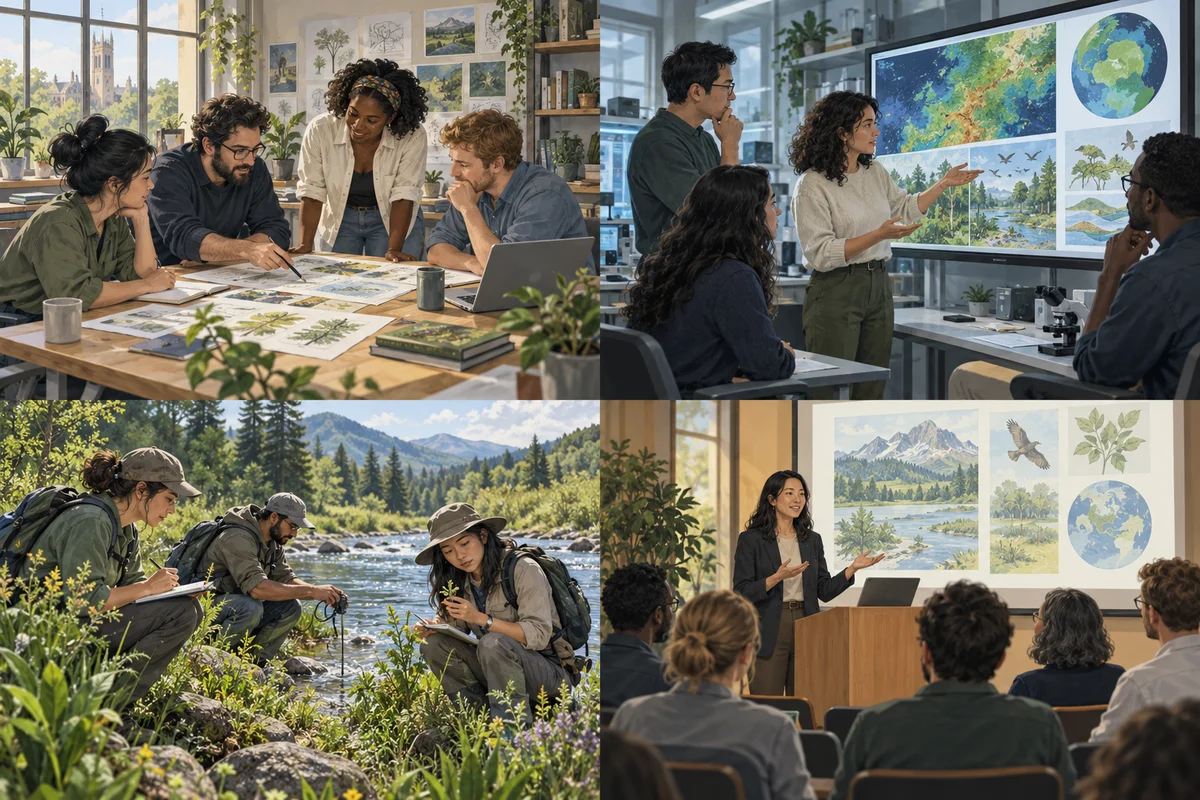
These virtual illustrations show collaboration, mentoring, field observation, and the working rhythm of a research group. Scroll horizontally to explore the gallery. Focus the gallery and use the Left and Right arrow keys. Moving photos pause while hovered or focused.

View lab life

News

These fictional updates show methods, research conversations, and team milestones. Real news will replace these demonstration records.

View news

Representative outputs

Selected publications involving members of the group. Explore the research themes and author profiles connected to each work; this selection is not a complete publication list.

View outputs
  1. Nature Plants

    Evidence for widespread thermal acclimation of canopy photosynthesis

    Jiangong Liu, Youngryel Ryu, Xiangzhong Luo, Benjamin Dechant, Benjamin D. Stocker, Trevor F. Keenan, Pierre Gentine, Xing Li, Bolun Li, Sandy P. Harrison, Iain Colin Prentice